Best Turbo Headers for LS V8 Swaps: High-Flow, Upwards and Forward Designs
For American V8 enthusiasts, upgrading to turbo headers tailored for GM LS-based engines can unlock significant power gains and better exhaust flow. The following five products are selected for their compatibility with LS1 through LS7 platforms, mandrel-bent 304 stainless steel construction, and up-and-forward geometries that suit single or twin-turbo setups. This guide compares key features, installation considerations, and performance implications to help you choose the right header kit for a robust turbo LS build.
| Product | Brand | Material | Key Benefit |
|---|---|---|---|
| Turbo Headers 1-7/8″ Up & Forward Facing | PG POWERGO MOTORSPORT | 304 Stainless Steel | Ideal primary tube diameter for high-boost turbo setups |
| POWERGO MOTORSPORT 1-5/8 x 2/1/2 in. 304 Stainless Steel Exhaust Headers | PG POWERGO MOTORSPORT | 304 Stainless Steel | Optimized for LS swaps with single turbo configurations |
| Exhaust Turbo Headers 1-3/4 x 3 in. Up and Forward Facing | PG POWERGO MOTORSPORT | 304 Stainless Steel | High-flow design for LS family V8 engines |
| ZIKAUTOX 1-7/8″ Up & Forward Facing Turbo Headers | ZIKAUTOX | 304 Stainless Steel | Durable, forward-facing headers built for turbo use |
| CHEVY GM LS Turbo Exhaust Hotparts T4 Kit | MMI | Turbo exhaust kit components | No relocation of alternator; comprehensive LS turbo kit |
Note: This article provides objective features, construction details, and installation considerations without pricing. Always verify fitment for your specific vehicle year and model before purchase, as LS engine swaps span a wide range of chassis and accessory configurations.
Turbo Headers 1-7/8 Inch Up & Forward Facing
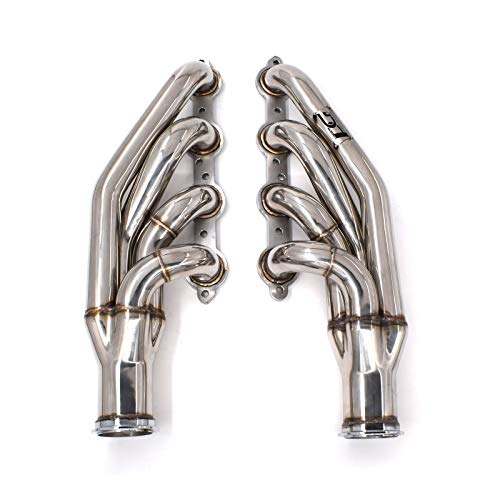
Designed for LS-based small block V8 engines (LS1, LS2, LS3, LS6), these headers support single or twin turbo builds. They feature an up-and-forward orientation and are fully mandrel bent with 16-gauge 304 stainless steel tubes. The design prioritizes exhaust flow toward the turbocharger, potentially improving spool and peak power. The 1-7/8 inch primary diameter is a common choice for higher-boost setups, though installation may require careful clearance checks with engine mounts and frame rails. The stainless construction resists corrosion and heat, which is beneficial for a high-heat turbo environment.
POWERGO MOTORSPORT 1-5/8 x 2/1/2 in. 304 Stainless Headers For Single Turbo LS Swap

These 304 stainless steel headers are specifically noted for LS-family swaps and single turbo configurations. They are fully mandrel bent, ensuring smooth exhaust gas flow and reduced backpressure. The 1-5/8 inch primary tubes with 2-1/2 inch collectors provide a balance between mid-range torque and top-end power, especially suitable for boosted LS builds in street-driven applications. The up-and-forward design helps with header clearance in various chassis layouts, though it may require additional fitment checks with transmission crossmembers and steering components.
Exhaust Turbo Headers 1-3/4 x 3 in. Up and Forward Facing
Designed for LS1 through LS6 engines, these headers use a 1-3/4 inch primary with a 3 inch collector, offering substantial flow for turbocharged applications. The up-and-forward orientation helps with under-hood clearance when running higher boost. Constructed from 304 stainless steel with mandrel bends, they resist heat creep and promote efficient scavenging at high RPM. Potential considerations include ground clearance around starter motors and accessory drives in tight engine bays, so checking fitment on your specific chassis is advised.
ZIKAUTOX 1-7/8″ Up & Forward Facing Turbo Headers
These ZIKAUTOX headers mirror the common up-and-forward design favored for turbo LS builds. With 1-7/8 inch primaries, they aim to support strong top-end power while maintaining tractable boost response. The 304 stainless steel mandrel-bent tubes resist thermal stress and deformation over time. As with other turbo headers, space around the steering, fuel system, and exhaust routing should be confirmed before purchasing to ensure smooth installation.
CHEVY GM LS Turbo Exhaust Hotparts T4 Kit
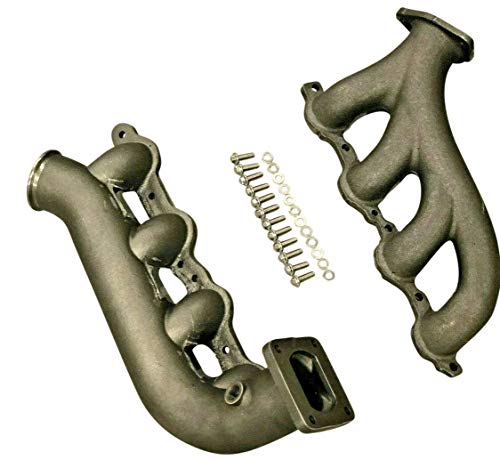
This kit caters to LS turbo setups and emphasizes a no-relocation-alternator approach, which can simplify installation in certain chassis. It targets 1999-to-current GM LS engines and offers components designed to support turbo exhaust routing with compatible manifolds and adapters. The kit’s emphasis on practical fitment makes it a potential option for builders seeking a consolidated turbo header solution, though compatibility with your exact vehicle model and engine spec should be verified.
Buying Guide: Key Purchase Considerations
- Engine compatibility: Confirm your LS family variant (LS1, LS2, LS3, LS6, LS7) and the specific head/valve train configuration to ensure the headers will fit without interference with rockers, valve covers, and spark plug wires.
- Header tube diameter: Primary tube diameters of 1-5/8″, 1-7/8″, and 1-3/4″ are common for turbo setups. Larger primaries can support higher horsepower and lower boost lag but may require more precise fitment in tight engine bays.
- Material and finish: 304 stainless steel with mandrel bends is standard for durability in heat and corrosion resistance. Ensure finish quality to resist rust in exhaust heat zones.
- Mounting and clearance: Up-and-forward designs aid clearance near the frame and steering components but can affect hood clearance and accessory layout. Verify clearance for spark plug boots and starter location on your build.
- Turbo integration: If building a single or twin turbo system, consider tube length consistency and collector design to optimize scavenging and spool behavior. Some kits are sold as complete turbo-ready headers; others require additional components like downpipes or flanges.
- Gasket and hardware compatibility: Look for kits that include gaskets, flanges, and mounting hardware. This reduces the need for separate purchases and ensures you have proper sealing for boost conditions.
- Installation difficulty: These headers involve welding and potentially engine removal in tight spaces. Assess whether professional installation is recommended for optimal alignment and leak-free seals.
- Vehicle-specific fitment: Confirm that the headers are listed for your chassis (e.g., C10, Camaro, Blazer, Suburban) and that there are no required modifications beyond standard bolt-ons.
As you compare options, balance performance goals with ease of installation and long-term reliability. A header designed for high-boost torque will differ from one optimized for top-end power; your choice should reflect your intended driving style, daily usability, and track requirements.
In summary, the selected products offer robust, turbo-oriented LS header solutions with stainless steel construction and forward/upward geometry. By evaluating tube diameter, fitment, and kit contents, you can assemble a coherent turbo LS setup that aligns with your power goals and chassis constraints.