Best Rust Eater Solutions for Cars and Metal Surfaces
Rust can threaten metal parts on vehicles, tools, and outdoor gear. This guide reviews five proven rust-eating options that work on cars and related metal surfaces, highlighting how each product dissolves rust, prepares for coating, and reduces scrubbing. The selections below focus on safe formulations, ease of use, and performance across automotive, tools, and restoration projects.
| Product | Brand | What It Does |
|---|---|---|
| Rust Dissolver Trigger Spray Gel | Rust-Oleum | Gel cling, fast rust dissolution |
| Rust Eater & Converter | STAR BRITE | Removes rust and converts to paint-ready surface |
| Overnight Rust Remover | Oil Eater | Water-based soak for deep rust removal |
| Rust Stopper | STA-BIL | Anti-corrosion spray with protective coating |
| Rust Dissolver Jelly | Rust-Oleum | Jelly formula for heavy rust areas |
When selecting a rust-eater, consider the rust severity, whether you need a surface-converter, ease of application, and the intended follow-up finish. For best results on cars, pair a rust remover with careful cleaning, drying, and a suitable protective coating to extend the life of exposed metal components.
Rust Dissolver Trigger Spray Gel

Rust-Oleum’s Rust Dissolver Trigger Spray Gel clings to metal surfaces, delivering a strong rust-dissolving action without heavy scrubbing. The spray gel grips vertical and horizontal surfaces, allowing a controlled application for automotive parts, tools, and grills. In practical use, the gel begins breaking down rust within minutes and typically requires 10–30 minutes for medium to light rust; heavier rust may need a second application. Rinsing or wiping after treatment leaves a ready-to-paint surface, reducing prep time before coating or plating. This product is well-suited for removal on automotive brackets, bolts, and metal tools where brush access is limited.
Rust Eater & Converter

STAR BRITE’s Rust Eater converts rust into a stable black metal layer, preparing surfaces for painting. This dual-action product removes oxidation while laying down a solid base for subsequent coatings. It is straightforward to apply—spray, brush, or dip after ensuring the surface is free of oil, grease, and loose rust. The converter step yields a versatile foundation for metal parts in cars, trailers, and tools where rust has begun to form but remains surface-level. The product’s chemistry emphasizes safety and ease of use for hobbyists and professionals alike.
Oil Eater Overnight Rust Remover

Oil Eater’s Overnight Rust Remover uses Rust-Soak technology to dissolve rust down to the clean metal surface. This soakable solution is ideal for larger automotive parts, hardware, and antiques that benefit from full immersion. Simply place rusted items in a leak-proof container and soak for up to 12 hours, then rinse. The water-based and biodegradable formula avoids harsh acids or fumes, offering a safer option for enclosed spaces or customers seeking a more eco-friendly rust solution. For cars or tools with intricate shapes, a soak can reach concealed rust areas that are hard to treat with brushes alone.
Rust Stopper
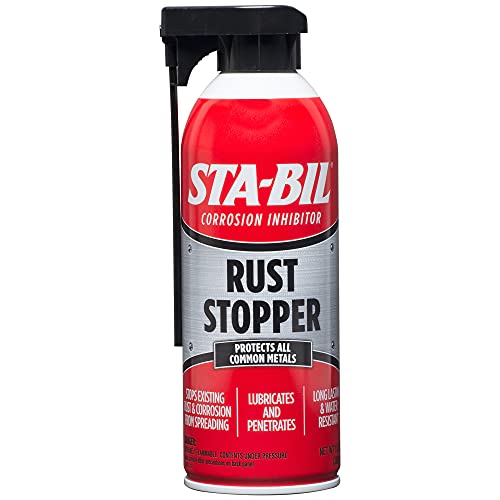
STA-BIL Rust Stopper is designed to both stop existing rust and prevent new rust formation. This anti-corrosion spray creates a protective, water-resistant coating that helps preserve metal surfaces on cars, battery terminals, and exposed hardware. The formulation remains durable in varying weather conditions, offering lubrication to reduce squeaks and sticking on moving parts. While it provides ongoing protection, surfaces should be cleaned and dried before application to ensure the protective layer adheres correctly. This option is particularly useful for automotive undercarriage, battery connections, and exposed metal trims prone to moisture exposure.
Rust Dissolver Jelly

Rust-Oleum’s Rust Dissolver Jelly is a heavy-duty option for stubborn rust on metal tools and vehicle components. The jelly format clings to rusted areas, concentrating the dissolving action where it’s needed most. Like the corresponding spray gel, it begins breaking down rust within minutes and typically completes its work in 10–30 minutes for medium to light rust. Heavier rust may require an additional coat or more time. The gel-like consistency is advantageous for vertical surfaces and hard-to-reach spots on automotive hardware, grills, and bike frames.
Buying Guide
Key considerations when choosing a rust-eater for cars and metal parts:
- Rust severity: For light surface rust, quick-acting gels or sprays are usually sufficient; for heavy rust or intricate parts, a soak or converter may provide better results.
- Surface preparation: Most products require cleaning oil, grease, or loose rust before application. Dry surfaces improve coating adhesion.
- Form factor: Gels cling to vertical surfaces; sprays reach tight spaces; soaks handle larger parts with thorough coverage.
- Safety and odor: Water-based and biodegradable formulas reduce harsh fumes; consider ventilation for enclosed spaces.
- Post-treatment protection: Decide whether you need a protective coating or corrosion inhibitor to prevent re-rust after the treatment.
- Surface compatibility: Test on a small area first to avoid discoloration or adverse reactions with paints, primers, or finishes used on vehicles.
In automotive restoration and everyday maintenance, selecting the right rust-eater hinges on the task at hand—quick rust removal from accessible areas versus comprehensive surface conversion or long-term protection. Combining a rust remover with proper surface care and protective coatings delivers durable results while minimizing labor and potential damage to the metal.