Best Fuel Pressure Tester Hose Kits for Precise Engine Diagnostics
Choosing the right fuel pressure tester hose kit helps technicians and builders accurately diagnose fuel delivery issues across cars, trucks, motorcycles, and more. This guide highlights five reliable options with versatile adapters, durable construction, and clear dual-scale gauges. Each product is evaluated for compatibility, ease of use, and measurement accuracy to support informed decisions for American readers working on gasoline engines.
| Product | Brand |
|---|---|
| 0-140PSI Fuel Pressure Tester Kit | jiouxip |
| AUTOWN Fuel Pressure Tester Kit 0-140PSI | AUTOWN |
| Orion Motor Tech Fuel Pressure Test Kit | Orion Motor Tech |
| BETOOLL | |
| Mizoneparts Fuel Injection Pressure Tester Adapter 305.32 | Mizoneparts |
0-140PSI Fuel Pressure Tester Kit
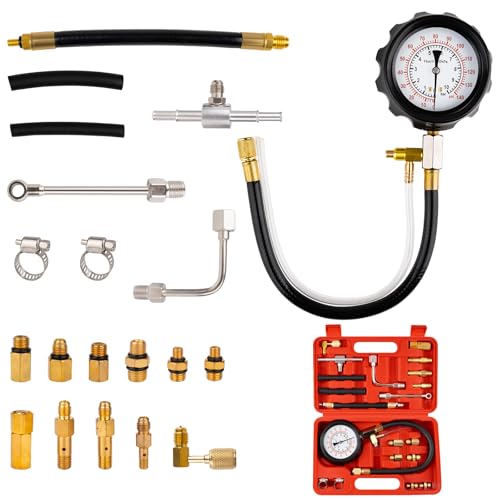
The jiouxip kit targets gas-powered engines across cars, trucks, motorcycles, and RVs. It features a wide compatibility profile with multiple adapters to cover common fuel system configurations. The device uses high-precision sensors to monitor fuel pressure changes, helping pinpoint pump or injector issues. While not compatible with certain high-pressure or diesel systems, this kit delivers reliable results for standard gasoline engines with a 0-140 PSI range. Its dual-scale display (0-140 PSI / 0-10 bar) supports clear, quick interpretation in various lighting conditions. For best results, verify valve sizes and pressure specs against the vehicle manual.
AUTOWN Fuel Pressure Tester Kit 0-140PSI
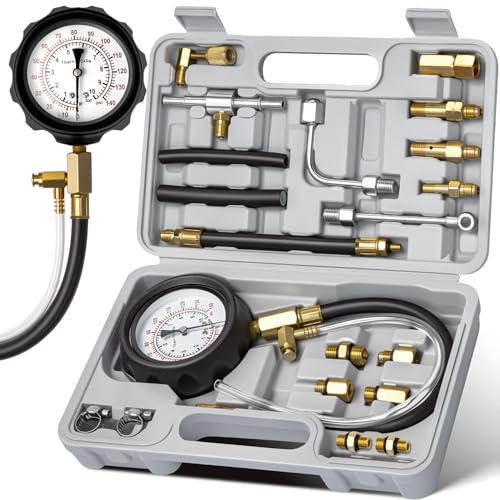
The AUTOWN tester emphasizes accuracy with a dual-scale gauge that shows both PSI and BAR, aiding precise diagnostics. Built with OEM-grade brass, aluminum, and steel, it withstands demanding workshop environments. The kit includes eight adapters (M6 to M14) and hoses with a quick-release valve, enabling quick hookup to a variety of fuel ports. This broad adapter set makes it suitable for many gasoline engines across different vehicle types. Users should confirm port compatibility with their specific vehicle to ensure a secure test setup.
Orion Motor Tech Fuel Pressure Test Kit

This complete kit from Orion Motor Tech covers a broad range of testing scenarios with a 15-inch hose for 1/4 inch Schrader valves and an 8-inch hose for M6 ports, plus M8–M14 adapters. It promises rock-solid accuracy with a dual movement gauge and a shockproof rubber casing to protect the dial in mobile environments. The adjustable dial allows reliable calibration for consistent results during calibration and testing sessions. It is well-suited for owners and technicians working on sedans, SUVs, trucks, and motorcycles who need a single, versatile testing solution.
BETOOLL 0-140PSI Fuel Injector Tester Kit

BETOOLL’s 0-140 PSI kit is designed for universal compatibility with many fuel injection systems and gas engines. It includes a durable brass connector and a corrosion-resistant rubber hose, built for repeated use. The kit focuses on diagnosing low fuel pressure, injector leakage, and related issues by providing a clear 0-140 PSI range. Note that certain brands and models (Bosch CIS Jetronic, GM TB, etc.) may be excluded; users should verify valve size and pressure specs before purchasing to ensure a proper fit for the application.
Mizoneparts 305.32 Fuel Injection Pressure Tester Adapter

The Mizoneparts 305.32 adapter offers enhanced compatibility for Ford F-Series models and select Lincoln vehicles, connecting to the fuel rail Schrader valve for precise testing. It includes two Schrader valves and a longer rubber hose (12.5 cm) to improve reach and reduce strain during measurements. This accessory is designed to work with the TU-114 gauge kit and is built from brass with reinforced rubber for durability under high pressure. It’s ideal for technicians who need extended reach and reliable seals in difficult-to-access fuel rails.
Buying Guide: Key Purchase Considerations
- Application compatibility: Confirm whether the tester supports your vehicle’s engine type, fuel system, and port sizes. Some kits exclude certain brands or direct-injection configurations.
- Pressure range and gauge clarity: A 0-140 PSI range is common for gasoline engines. dual-scale gauges (PSI and BAR) improve readability in varied lighting conditions and reduce interpretation errors.
- Adapters and hoses: A broad adapter set (M6–M14, Schrader valves, various hose lengths) increases the likelihood you can hook into the fuel rail or injector ports without tools or modifications.
- Durability and materials: Look for brass fittings, sturdy aluminum or steel components, and a reinforced, leak-resistant hose to ensure long-term reliability in workshop environments.
- Calibration and accuracy: A tester with a calibrated dial and a stable, shock-resistant casing reduces measurement drift during vehicle diagnostics or while the vehicle is running.
- Port accessibility: Some adapters add elbow joints or longer hoses to access hard-to-reach fuel rails. Consider your engine layout and whether a 90-degree elbow would help.
- Ease of use and safety: Quick-release valves and clear color-coded scales help improve workflow and reduce accidental leaks or spills during testing.
- Brand and warranty: Reputable brands with comprehensive documentation, customer support, and warranty terms can be beneficial for frequent diagnostic work.
Practical tips for effective testing
- Always consult the vehicle owner’s manual to verify port sizes, pressure specifications, and compatibility before purchasing or using a tester.
- Perform tests with the engine off first to establish a baseline, then re-check with the engine running to observe real-time fuel pressure behavior.
- Inspect adapters and hoses for wear or leaks before each use; replace any damaged components promptly to avoid inaccurate readings.
- Keep a log of readings and compare them against known healthy pressure ranges for specific makes and models to identify anomalies.