Best Extended Battery Cables for Safe and Flexible Vehicle Power Connections
Extending car battery cables is a practical way to relocate, connect, or jump-start vehicles in tight spaces, off-road rigs, boats, or solar setups. This guide highlights select 4 AWG to 6 AWG battery cables and related accessories designed for durability, corrosion resistance, and reliable conductivity. Each option below is chosen for broad vehicle compatibility, including cars, trucks, RVs, boats, and ATVs. Explore how these cables can improve accessibility, safety, and performance in demanding environments.
| Product | Brand | Length / Size | Main Benefit |
|---|---|---|---|
| Zrigiwr 4AWG 15-Inch Battery Cables Set | Zrigiwr | 4 AWG, 15 inches | Premium copper, robust terminals, durable PVC sheath |
| CARTMAN 4AWG 18-Inch Battery Inverter Cables | Cartman | 4 AWG, 18 inches | High current capacity, corrosion-resistant lugs |
| Gebildet 30cm Battery Inverter Cable | Gebildet | 30 cm, 25mm² (3 AWG) | Flexible PVC insulation, multi-use red/black leads |
| Energizer Jumper Cables | Energizer | 16 ft, 6 gauge | Thick vinyl coating, carrying case |
| QKUDNGHY 20-Inch Battery Cables Set | QKUDNGHY | 4 AWG, 20 inches | Oxygen-free copper, pre-sealed terminals |
Note: All products are suitable for multiple vehicle types and power needs, from marine budgets to off-road adventures and solar charging setups. When choosing cables, consider length, gauge, terminal compatibility, and environmental resistance to ensure safe operation under load and in varying weather conditions.
Zrigiwr 4AWG 15-Inch Cable Set

The Zrigiwr kit includes one positive and one negative cable with 3/8″ M10 lug terminals. Crafted from pure copper, these cables prioritize high conductivity and long-term stability. The tinned copper ring terminals are broad and thick for stable contact, and a modern crimping process helps prevent oxidation and corrosion. The PVC sheath provides protection against abrasion, moisture, and harsh environmental conditions, making these cables suitable for cars, trucks, solar setups, marine applications, lawn equipment, and RVs. This set emphasizes reliability under demanding use.
Key features include:
- Premium pure copper conductors
- Tinned copper ring terminals for solid, corrosion-resistant connections
- Flexible, abrasion-resistant, and flame-retardant PVC insulation
CARTMAN 4AWG 18-Inch Inverter Cables
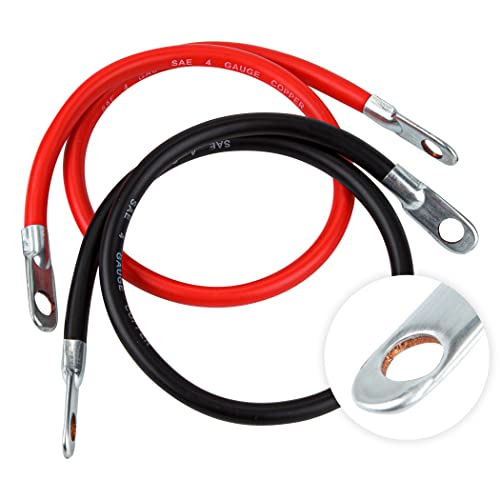
Cartman’s 4 AWG cables are designed for robust current transfer, compatible with 3/8″ stud connections. The copper lugs are zinc plated to resist corrosion, helping maintain performance across vehicle types like cars, trucks, RVs, and solar setups. Better stamping reduces resistance and improves current flow, making these a solid choice for high-demand installations where reliability matters.
Highlights:
- 4 AWG copper with 18-inch length
- Zinc-plated copper lugs for corrosion resistance
- High-current capability with reduced resistance
Gebildet 30cm Battery Inverter Cable

Gebildet offers a compact 30 cm red/black cable pair with 25 mm² (approx. 3 AWG) cross-section and a maximum 125A rating. Made from copper with durable connectors, these leads are designed for parallel or series battery connections and feature highly flexible PVC insulation. They resist abrasion, oil, water, and heat—ideal for automotive, marine, RV, or solar applications where quick, reliable power transfer matters in tight spaces.
Key aspects include:
- Copper wires with robust battery terminals
- Red and Black PVC-insulated leads
- Versatile for multiple vehicle configurations
Energizer 16-Foot Jumper Cables
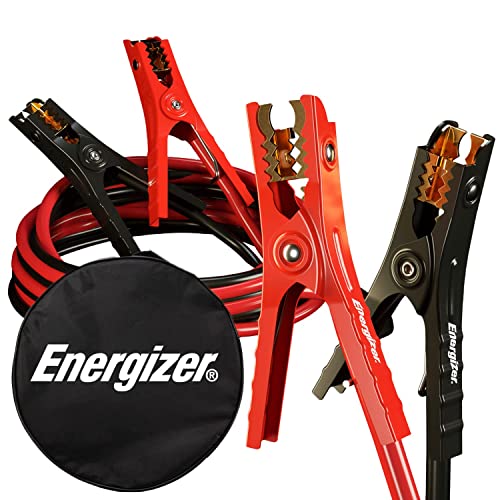
These Energizer booster cables are 6 gauge and 16 feet long, designed for jump starting and providing stable, high-current connections to dead or weak batteries. They feature thick vinyl coating for protection against rust and corrosion, a user-friendly carrying case for storage, and a sturdy handle for easy positioning during assistance. This option suits emergency prep kits, fleet vehicles, and mid-size cars needing reliable, readily accessible jumper cables.
Notable points:
- 6 gauge, 16 feet
- Thick vinyl coating and protective carrying case
- Suitable for a broad range of vehicles
Kikerike Battery Relocation Kit
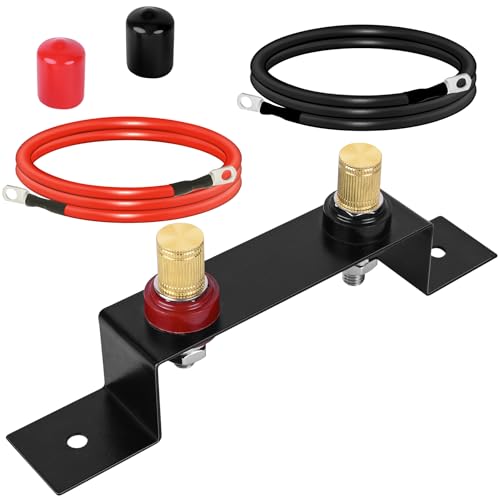
The Kikerike relocation kit provides heavy-duty remote battery terminals with a mounting bracket and copper wiring designed to move the battery to a safer, more accessible space under the hood. The kit includes metal hardware coated to resist corrosion and flame-retardant PVC insulation, which helps maintain safe operation in extreme conditions. This option is suitable for trucks, ATVs, boats, and RVs looking to free up engine bay space or improve accessibility for charging and maintenance.
Key advantages:
- Safe relocation of vehicle battery to accessible area
- Durable, corrosion-resistant hardware
- Universal compatibility with many battery types
QKUDNGHY 20-Inch Battery Cables Set

This set features 4 AWG, 20-inch long power cables with 3/8″ lug terminals. The oxygen-free copper core improves current handling and reduces resistance, while pre-sealed terminal rings with heat shrink provide corrosion protection. The tinned copper lugs further resist oxidation, making these cables suitable for solar, marine, ATV, and automotive use where reliable performance over time is required.
Highlights include:
- 4 AWG, 20 inches with 3/8″ lugs
- Oxygen-free copper core and tinned lugs
- Heat shrink sealed terminals for durability
Buying Guide: Key Purchase Considerations And Comparisons
When selecting extended battery cables, balance length, gauge, and terminal compatibility with your specific setup. Consider the following factors to tailor a choice to your needs.
- Current capacity and resistance: Higher gauge (lower number) supports more current with less resistance. For most vehicles and off-grid applications, 4 AWG is common; for heavy loads, 6 AWG can suffice depending on length.
- Length versus flexibility: Longer cables reach awkward mounting points but increase resistance. Choose the shortest length that meets the task to minimize losses.
- Terminal quality: Lug terminals should be corrosion resistant (zinc-plated or tinned copper) and match your stud sizes (3/8″ or M10). Ensure crimps are solid and protected from moisture.
- Insulation and environmental resistance: PVC insulation that is flame-retardant, water-resistant, and abrasion-proof improves longevity in automotive, marine, and outdoor settings.
- Compatibility and packaging: Some sets include a complete pair with connectors, hardware, and protective storage bags, which simplifies installation and transport.
- Relocation versus extension: If relocating a battery, consider relocation kits with mounting hardware and safety features; for simple extensions, cable sets are usually enough.
- Safety considerations: Avoid overheating cables by not exceeding amperage ratings; inspect for wear, protect hoses and wires from sharp edges, and route cables away from heat sources and moving parts.
In summary, the best extended battery cables combine high-conductivity copper, corrosion-resistant terminals, robust insulation, and properly matched lengths. For most everyday needs, a 4 AWG pair around 15–20 inches offers a versatile balance of current capacity and maneuverability. For longer routes or higher demand, stepping up to 6 gauge with reinforced lugs or a dedicated relocation kit can provide safer and more convenient access to battery connections.