Best Car Batteries for Less: Reliable Picks for Budget-Friendly Vehicle Power
Finding a dependable car battery without breaking the bank is possible with modern AGM and LiFePO4 options. This guide highlights five cost-conscious choices that balance fit, performance, and long life. Each product is evaluated on compatibility, cold-cranking power, capacity, and maintenance needs to help you choose the right battery for your vehicle and climate.
| Product | Battery Type | Approximate Capacity | Key Strength |
|---|---|---|---|
| Autocessking H5 Group 47 AGM | AGM | 60Ah | 680 CCA, 100 RC |
| 1AUTODEPOT Group 94R AGM | AGM | 80Ah | 850 CCA, 140 RC |
| Mighty Max MM-G35 | AGM | 55Ah | 650 CCA, 100 RC |
| ECIENWELL LiFePO4 12V | LiFePO4 | 40Ah | 660 CCA, 100 RC |
| SEFEPODER 24V LiFePO4 | LiFePO4 | 40Ah | 30A fast charge, IP66 |
These options cover traditional AGM for stronger cold starts and long life, plus LiFePO4 solutions for lighter weight and high cycle life. Consider your vehicle’s electrical demands, climate, maintenance preferences, and whether you need standard 12V systems or 24V setups. Below are detailed product sections to help you compare features side by side.
Autocessking H5 AGM Car Battery

Autocessking’s H5 Group Size 47 battery is a 12V AGM design rated at 60Ah with 680 cold-cranking amps (CCA) and 100 reserve capacity (RC). It fits BCI Group Size 47 (H5) applications, featuring left negative and right positive terminals. The battery maintains reliable starts across a wide temperature range from -18°C to 60°C and can withstand short-term extremes up to 75°C. AGM construction delivers maintenance-free operation with higher conductivity and a longer cycle life than conventional flooded batteries, making it a strong all-weather choice.
Fitment and terminal orientation are critical; verify dimensions (9.57 x 6.89 x 7.48 inches) and terminal positions against your vehicle’s original battery. The battery’s strong starting power and maintenance-free design make it suitable for modern vehicles with higher electrical demands, including start-stop systems.
1AUTODEPOT Group 94R AGM Battery

This 12V 80Ah AGM battery provides robust starting power with 850 CCA and 140 RC. It uses tapered terminals (left negative, right positive) and adheres to stringent size requirements (12.36″ L x 6.89″ W x 7.48″ H). It offers a long cycle life—potentially twice that of typical flooded batteries—making it a solid choice for vehicles with high electrical loads or frequent engine restarts. Operating temperature ranges extend from -22°F to 158°F, enabling dependable performance in diverse climates.
Before purchasing, verify the exact dimensions and terminal layout to ensure compatibility with your vehicle’s battery tray and cable routing. This configuration is well-suited for modern cars and SUVs that demand reliable cold-weather starts and durable performance in hot climates.
Mighty Max MM-G35 AGM Battery

The Mighty Max MM-G35 is a 12V, 55Ah AGM battery with 650 CCA and 100 RC, designed for a reliable startup across seasons. Its sealed and spill-proof design minimizes maintenance needs while supporting high-discharge output and resilient deep-discharge recovery. The 100-minute reserve capacity helps keep essential electronics powered during brief alternator or electrical system fluctuations.
Ideal for vehicles that experience frequent engine starts or require steady power for accessories, the MM-G35 balances cost and performance, offering robust reliability without the complexity of lead-acid maintenance. Check fitment for your vehicle’s battery tray size and terminal arrangement to ensure proper installation.
ECIENWELL LiFePO4 12V Battery
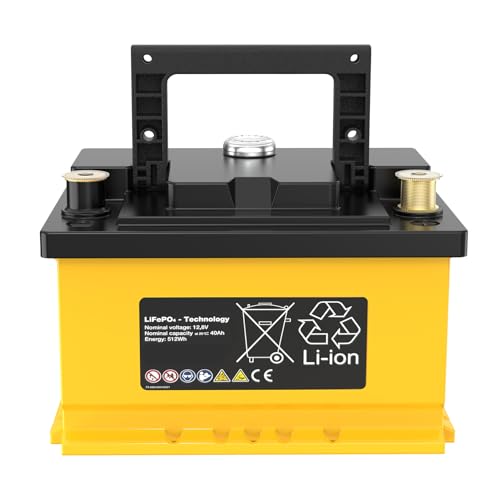
ECIENWELL offers a LiFePO4 12V battery with 40Ah capacity, rated at 660 CCA and 100 RC. This compact lithium option is IP66 waterproof and designed as a Start-Stop replacement. It emphasizes extended service life, lighter weight (about one-third the weight of comparable lead-acid batteries), and reduced maintenance due to an integrated BMS (battery management system) that guards against overcharge, overdischarge, and short circuits. Dimensions and installation may require adjustments given the different terminal layout and heightened voltage stability.
Consider LiFePO4 for lighter weight, faster charging, and longer cycle life, especially in vehicles that frequently use accessory power or hybrid-isolated systems. Confirm compatibility with your vehicle’s electrical system and charging profile before replacement.
SEFEPODER 24V LiFePO4 Deep Cycle Battery
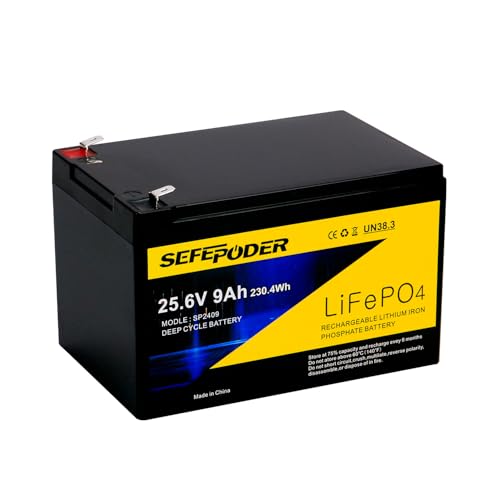
SEFEPODER’s 24V LiFePO4 deep cycle battery targets 24V systems, offering 40Ah capacity with built-in 30A BMS protection. It supports long cycle life (3,000+ cycles) and is designed for lighting, scooters, ride-on toys, UPS applications, and other devices requiring reliable, lightweight power. It provides safe operation with stable voltage under load and safe charging behavior, and it can be mounted in series or parallel configurations to fit your voltage needs.
When selecting LiFePO4 for 24V systems, verify compatibility with your equipment, BMS features, charging voltages, and mounting considerations. While offering excellent cycle life, LiFePO4 packs require appropriate charging gear and may have different charging profiles than standard 12V lead-acid batteries.
Buying Guide: Key Purchase Considerations
Buyers should evaluate compatibility first. Check the battery’s group size, terminal orientation, and tray dimensions against your vehicle’s OEM battery. For cars with stop-start systems, AGM or AGM-compatible designs tend to deliver better resiliency and longer life than traditional flooded batteries.
Power metrics matter. CCA indicates cold-start strength, important in cold climates. RC (reserve capacity) reflects how long the battery can run essential systems if the alternator fails. A higher CCA and RC typically translate to more reliability in winter and when running multiple accessories.
Technology choice affects maintenance and weight. AGM batteries are maintenance-free and more vibration-tolerant than flooded lead-acid. LiFePO4 batteries offer lighter weight, longer cycle life, and faster charging but require compatible charging equipment and may have different voltage characteristics. Consider your climate, driving patterns, and whether you prioritize weight savings or simple maintenance.
Durability and temperature tolerance are key for longevity. Batteries designed for extreme temperatures help preserve performance; check operating temperature ranges and whether the design supports start-stop systems. IP ratings (for LiFePO4 models) indicate water and dust resistance, relevant for exposed installations.
Installation and warranty should be reviewed. Ensure correct terminal sizing and polarity alignment. Warranty terms can vary widely; longer warranties may indicate higher confidence in durability. If you’re uncertain about fitment or compatibility, consult a professional installer or refer to your vehicle’s service manual.
Budget and value matter. The best “for less” option balances initial cost with expected life, maintenance savings, and performance. Compare total ownership costs rather than just upfront price to determine the most economical choice over the battery’s lifetime.