Best CAN Bus Steering Wheel Control Interfaces for Aftermarket Radios
The right steering wheel control interface keeps OEM button functions when upgrading your car stereo. This guide covers top CAN bus and data SWC adapters that work with a wide range of vehicles and head units. Each product section below highlights compatibility, installation approach, and standout features to help you compare options quickly.
| Product | Brand | Key Features | CAN/Data SWC Support |
|---|---|---|---|
| PAC SWI-RC1 Steering Wheel Control Interface | PAC | Pre-programmed button functions; quick DIP switch configuration | Analog (resistive) and Data SWC |
| Pac Universal Analog Can-Bus SWICP2 | PAC | Plug-and-play installation; vehicle lookups via ControlPRO APP | Analog (resistive) and Data SWC |
| iDatalink Maestro ADS-MSW | MAESTRO | Retains OEM controls; broad vehicle compatibility | CAN/Data SWC environments |
| Metra Axxess ASWC-1 | Axxess | Auto-detect; USB firmware updates; wide radio compatibility | Data SWC capable |
| PAC RP4-CH11 | PAC | All-in-one radio replacement and SWC interface | CANbus in select models |
Note: The list above is tailored to CANbus steering wheel control solutions compatible with mainstream aftermarket radios. Always verify vehicle compatibility and radio model support before purchase.
PAC SWI-RC1 Steering Wheel Control Interface

The PAC SWI-RC1 is designed to retain steering wheel controls across more than 3,000 vehicles. It supports both analog resistive and Data SWC systems, making it suitable for a wide range of radios and vehicle configurations. Quick pre-programmed button functions simplify setup via DIP switch selection, reducing the need for extensive wiring or computer configuration. This interface is particularly helpful when upgrading to modern head units while preserving factory convenience features and driver safety considerations.
Installation considerations include confirming whether your vehicle uses an analog SWC or a data-based system, and ensuring your new head unit is compatible with PAC’s SWC scheme. The SWI-RC1 emphasizes fast retention and straightforward programming, which can minimize downtime during a radio upgrade. For vehicles with complex CANbus messaging, you may need additional adapters or computer-based programming to ensure full button mapping accuracy across all functions.
In practice, users report reliable performance across many popular models, with the interface handling common inputs like volume, track changes, and voice command activations. If your vehicle uses nonstandard SWC messaging or newer CAN protocols, PAC’s documentation or customer support can help identify the correct DIP settings for optimal operation. The SWI-RC1 can be a solid core component in a broader SWC strategy for a clean, factory-like steering wheel experience.
Pac Universal Analog Can-Bus SWICP2

Overview
The Pac SWICP2 is designed for broad compatibility with analog resistive and data SWC systems. It emphasizes plug-and-play installation and vehicle lookup to match the correct SWC signals with numerous aftermarket receivers. The device supports both resistive and data-based steering wheel controls, and can be configured via DIP switches or a PC app for direct flash. It streamlines the integration process for users upgrading to a newer stereo while preserving steering wheel functions.
Key installation considerations include confirming support for your specific head unit brand and model, and whether you will use the ControlPRO APP for vehicle lookups or direct flash. The SWICP2 is positioned for users who want a flexible, time-saving solution with straightforward mapping, especially for vehicles with complex CAN networks or when precise button assignments are needed for a custom radio setup.
Performance is typically consistent for common controls like volume, track changes, and call control, with most vehicles benefiting from the quick lookup and DIP-switch configuration. As with all CAN-bus SWC interfaces, a detailed vehicle compatibility check is recommended to avoid feature gaps on certain trims or regional variants.
iDatalink Maestro SW ADS-MSW

Overview
The iDatalink Maestro SW is designed to retain OEM steering wheel controls when upgrading to an SWC-compatible aftermarket radio. It is a universal interface that supports a wide range of vehicles and radios, with the possibility to assign a secondary press and hold feature to buttons for enhanced control. Compatibility extends to more than 1,700 vehicles produced after 1998, making it a versatile choice for many owners seeking seamless integration of original controls with a modern audio system.
Key strengths include broad vehicle coverage, robust compatibility with most major aftermarket radios, and the ability to preserve critical functions like OnStar settings, backup camera activation, and RSE controls in some configurations. Setup often involves plugging into the factory pre-wiring harness, then programming via the Maestro’s interface to map steering wheel commands to the new radio. This solution is valued for its comprehensive compatibility rather than a single-brand bias.
Considerations for selecting Maestro SW include assessing whether your vehicle’s CAN bus messaging aligns with the supported data formats and confirming the exact radio compatibility list for your model year. The ADS-MSW is typically a strong choice for owners who demand reliable preservation of OEM controls while upgrading to a feature-rich aftermarket head unit.
Metra Axxess ASWC-1
Overview
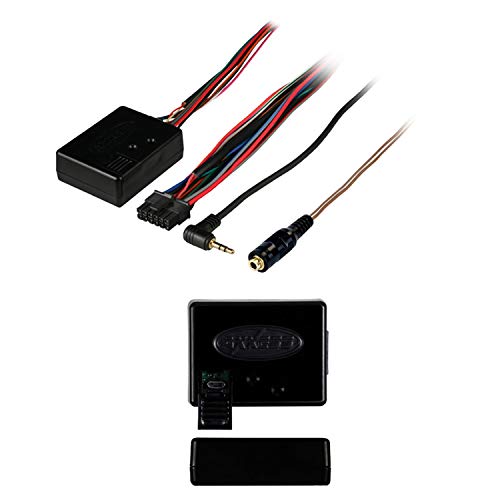
The Metra Axxess ASWC-1 is known for its auto-detect capability and broad radio compatibility. It updates via micro USB and can auto-detect the connected radio to program steering wheel controls automatically in many vehicles. The ASWC-1 reduces manual mapping work by identifying vehicle and radio pairings, delivering a straightforward installation path for users upgrading their stereos. This can be especially helpful for DIY enthusiasts looking to minimize configuration complexity.
Installation considerations include ensuring the chosen head unit supports ASWC-1 integration and understanding how auto-detection interacts with newer CANbus configurations. The ASWC-1 is frequently praised for its wide compatibility and simple update path, but some users report occasional misfires in complex CAN networks requiring manual tweaks or unit-specific firmware updates. Overall, it provides a solid balance between ease of use and broad compatibility for many common car models.
Performance notes emphasize reliable button response for common controls like volume, track selection, and voice command triggers. As with any SWC interface, verifying both vehicle-specific wiring and radio compatibility is essential to avoid missing functions or inconsistent behavior on certain trims.
PAC RP4-CH11 All-in-One Interface

Overview
The PAC RP4-CH11 combines radio replacement with SWC preservation in select Chrysler platforms. This all-in-one interface is designed to manage CANbus signals while maintaining essential OEM safety and convenience features. The RP4-CH11 ships preloaded with amp-retention and navigation-based output signals to ensure a cohesive upgrade where factory amplifiers and navigation functions remain intact. It provides a comprehensive pathway to replace a factory radio without losing steering wheel controls or essential vehicle features.
Key considerations include confirming vehicle compatibility with CANbus routing and the ability to retain features such as door chimes, parking sensors, or other vehicle-specific signals. The RP4-CH11 can simplify the installation path by bundling multiple SWC and integration needs into a single module, which is advantageous for users performing a full radio replacement in compatible Chrysler models. Users should review any model-year caveats and ensure the new head unit supports CAN-bus outputs aligned with this interface.
Performance highlights focus on stable SWC mapping and reliable retention of core controls during radio upgrades. For many owners, this interface offers a dependable, all-in-one solution that minimizes post-install tweaks while preserving OEM-like control semantics across key vehicle functions.
Connects2 CTFD1100 CAN-Bus Radio Replacement Module

Overview
The Connects2 CTFD1100 module provides CAN-bus radio replacement with steering wheel control retention for select 2005-2016 F-150 and Mustang models, among others. It includes an antenna adapter and data-bus-driven outputs such as retained accessory power and vehicle speed signals. The module is designed to bridge factory CAN messaging with an aftermarket radio while preserving key vehicle features and signals, reducing the risk of losing critical systems during an upgrade.
Usage considerations cover ensuring compatibility with your specific vehicle’s CAN architecture and confirming that the SWC functionality remains consistent with your chosen aftermarket head unit. The CTFD1100 is beneficial for users who want to maintain a broad set of factory signals (RSE, backup camera, etc.) while upgrading the stereo. As always, verify the exact wiring harness connections and any required vehicle-specific adapters before installation to maximize compatibility and performance.
Buying Guide: Key Purchase Considerations
- Vehicle compatibility: Check the list of supported makes, models, and years to ensure full SWC retention on your vehicle.
- CAN vs analog SWC: Determine whether your car’s steering wheel controls use CANbus messages or analog resistive signals, and pick an interface that supports your system type.
- Radio compatibility: Confirm your aftermarket head unit supports the interface’s data formats and mapping capabilities.
- Mapping and control features: Look for auto-detect features, DIP-switch programming, and app-based vehicle lookups to simplify setup and achieve accurate button mappings.
- Installation effort: Some interfaces require only plug-and-play connections, while others may need vehicle-specific adapters or software for final mapping.
- Firmware and updates: USB-updatable interfaces can offer improved compatibility over time; check for ongoing support and firmware release notes.
- Maintenance of OEM features: If your vehicle relies on integrated safety or convenience features (OnStar, RSE, backup camera), verify that the interface preserves these aspects during the upgrade.
- Support and documentation: Access to clear installation guides and responsive customer support can reduce troubleshooting time during setup.
When evaluating options, consider the balance between breadth of vehicle coverage and the depth of features preserved. For complex CAN networks or regional model variations, a Maestro or OEM-focused solution often provides the most reliable mapping, while auto-detect interfaces can offer rapid setup for more common configurations. Always confirm that the chosen product aligns with your radio model and your vehicle’s CAN architecture to ensure consistent, safe operation of steering wheel controls after installation.