Best Automotive Hydraulic Floor Jacks for Safe, Easy Lifting
Choosing a hydraulic floor jack involves balancing capacity, lift height, stability, and portability. Below is a curated guide to five reliable models that cover a range of vehicles and garages. Each entry includes a quick overview of its lifting power, range, and standout features to help you compare at a glance.
| Product | Brand | Lift Range | Capacity |
|---|---|---|---|
| AV Steel 3 Ton Floor Jack | AV Steel | 5.5″ to 18.5″ | 6,600 lbs |
| DNA Motoring TOOLS-00234 | DNA MOTORING | 5.1″ to 13″ | 4,000 lbs |
| Jack Boss 3 Ton Low Profile | Jack Boss | 3-15/16″ to 18-5/16″ | 6,600 lbs |
| Maxority 5-Ton Low Profile | Maxority | Low profile to high reach (specifics vary) | 11,000 lbs |
| TONDA Floor Jack 2 Ton | TONDA | 4.9″ to 11.8″ | 3,800 lbs |
Notes: Lift ranges are approximate based on product listings. Capacity indicates maximum safe load. Always inspect the saddle alignment and read the user manual before lifting.
AV Steel 3 Ton Floor Jack

Capacity and design focus on heavy-duty lifting for cars, trucks, and SUVs. The jack lifts from 5.5″ to 18.5″ and supports up to 6,600 lbs. A 360° rotatable saddle provides vehicle protection, while dual-wheel mobility aids maneuverability. Built with durable steel and meets ANSI/ASME PASE safety standards.
DNA Motoring TOOLS-00234 2 Ton Floor Jack
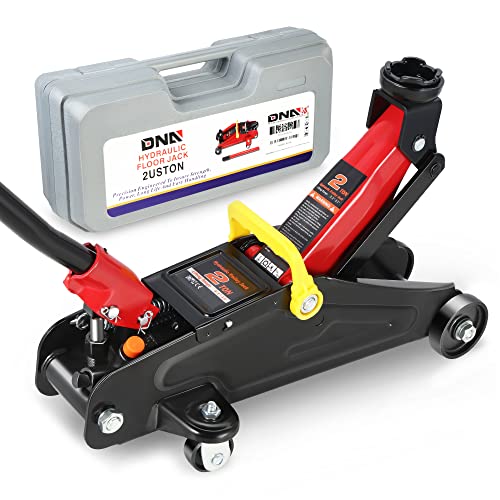
This low-profile hydraulic trolley jack provides a 5.1″ to 13″ lift range with a 4,000 lb capacity. It emphasizes quick lift, stability, and easy positioning through swivel casters. The safety valve activates during overload to help prevent damage or injury, making it suitable for many domestic and light commercial tasks.
Jack Boss 3 Ton Low Profile Floor Jack
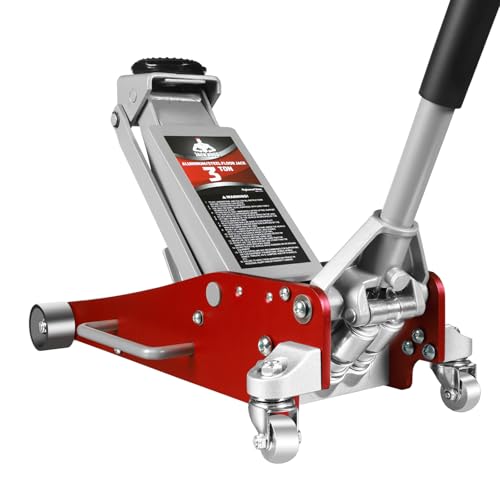
This low-profile jack combines aluminum and steel construction for a 3-ton capacity with a low profile lift range from 3-15/16″ to 18-5/16″. It features dual pistons for quick lifting, a large rubber saddle to protect the vehicle, and rugged swivel casters for precise positioning. It meets ANSI/ASME safety standards.
Maxority 5-Ton Low Profile Floor Jack

Designed for heavy-duty maintenance, this 5-ton jack features a dual-piston quick lift system for faster vehicle elevation. It offers a long lever handle for max leverage, aiding in lifting heavier loads with less effort. It is suitable for cars, trucks, and larger sport utility vehicles in workshops and garages.
TONDA Floor Jack 2 Ton

Compact and portable, this 2-ton hydraulic jack provides a 4.9″ to 11.8″ lift range. It emphasizes safety with a bypass valve to prevent overloading and offers easy maneuverability through multiple caster configurations. It’s well-suited for everyday maintenance on standard sedans and smaller SUVs.
Buying Guide: Key Purchase Considerations
- Weight capacity: Match the jack’s rated load to your vehicle’s gross vehicle weight plus a safety margin. For most passenger cars, 2–3 tons is common; for light trucks and SUVs, 3–5 tons may be preferable.
- Lift height and range: Ensure the minimum height allows sliding under your vehicle and the maximum height clears the jacking points with room to spare for wheel removal.
- Low-profile design: Important for vehicles with low ground clearance. Look for models with low minimum heights to maximize undercar visibility.
- Stability features: A wide base, a 360° rotating saddle, and dual pistons or rigid casters improve stability and safety during lifting and lowering.
- Overload protection: A built-in relief valve or safety valve helps prevent sudden failure if overloaded.
- Construction materials: Steel jacks offer durability; aluminum variants are lighter but may have different load characteristics. Consider your balance of weight and strength.
- Mobility and setup: Swivel casters and ergonomic handles ease positioning and operation in tight spaces or busy garages.
- Maintenance: Regularly check hydraulic fluid levels, inspect seals for leaks, and store in a dry area to prolong life.
- Safety compatibility: Confirm the jack meets applicable standards (e.g., ANSI/ASME) and follow the vehicle manufacturer’s jacking points to avoid damage.
For a typical home garage, a 2–3 ton jack with a low minimum height and adequate lift range offers broad compatibility with sedans and many SUVs. For workshops and hobbyist mechanics working with trucks or larger vehicles, a 4–5 ton option delivers greater versatility. Always pair a hydraulic floor jack with jack stands and use proper wheel chocks when performing lifting tasks.