Best One Man Brake Bleeding Kit Solutions for Quick, Clean Service
Choosing the right one-man brake bleeding kit can save time and reduce mess during brake maintenance. This article reviews five top options designed to let a single person bleed hydraulic brakes or clutches efficiently. Each product supports minimal downtime, clean operation, and reliable air exclusion to keep your braking system in optimal condition.
Summary of chosen products
| Product | Brand | Key Benefit | Typical Use |
|---|---|---|---|
| OFBAND 2Set Brake Bleeder Kit | OFBAND | One-way valves, complete kit for motorcycles and cars | Brake fluid bleeding for multiple vehicles |
| PESIKO 1L Brake Bleeder Bottle | PESIKO | Precise valve, 24″ tube, simple operation | Brake fluid collection and backflow prevention |
| BILITOOLS 3L Brake Bleeder Vacuum Pump Kit | BILITOOLS | Vacuum-assisted, large reservoir, ABS friendly | Full-system bleed, faster operation |
| PESIKO Brake Bleeder Kit 1L | PESIKO | Durable plastic, 24″ tube, straightforward use | Individual wheel bleed with hose setup |
| OEMTOOLS 25036 Bleed-O-Matic | OEMTOOLS | One-man operation with magnetic bottle | Caliper, wheel cylinder, master cylinder bleed |
OFBAND 2Set Brake Bleeder Kit

The OFBAND kit includes 2 inlet hoses, 2 outlet hoses, 2 one-way check valves, clamps, and screw caps. It is designed to fit hydraulic brakes on most motorcycles, cars, and bikes. The one-way valves prevent air and contaminants from entering the braking system, maintaining internal cleanliness. Dust-proof screw caps help manage gas release and minimize dust or grease buildup around the bleeder screw.
Key features include a complete set of hoses and clamps to minimize spills, plus dust-protection for the screw caps. This kit is suitable for a range of vehicles and emphasizes keeping the system sealed during bleeding to reduce air integration and contamination.
PESIKO 1L Brake Bleeder Bottle

The PESIKO bottle features a 24-inch hose and a rubber connector to collect old brake fluid efficiently. It uses a precision one-way valve to seal and control fluid, preventing backflow and air ingress. The bottle and hoses are constructed from high-rigidity plastic with corrosion-resistant parts, designed for extended service life.
Design notes emphasize ease of use: attach the rubber connector to the bleed screw, secure with a chain or place on a flat area, press the brake pedal to fill the hose with fluid, and repeat per wheel. The kit aims to provide a clean, low-muss bleed process.
BILITOOLS 3L Brake Bleeder Vacuum Pump Kit
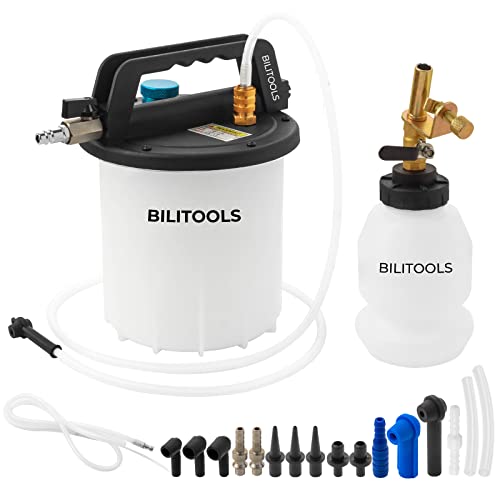
This kit enables one-person brake bleeding through vacuum pressure, connecting to an air compressor for consistent results. It operates at 70–170 PSI and features a large 3L reservoir, reducing refills and speeding up full-system bleeding. It also helps prevent backflow and works with ABS-equipped systems, minimizing mess and effort during use.
Additional advantages include a robust design for repeated use and adapters to suit different vehicle configurations. The vacuum approach can be more efficient than manual pumping, especially for multi-wheel bleeds, and helps maintain a cleaner work area during operation.
PESIKO Brake Bleeder Kit, 1L

This PESIKO kit provides a 1L brake bleeder bottle with a 24-inch hose and rubber connector to collect used fluid. It uses durable high-rigidity plastic and corrosion-resistant components. The assembly is designed for straightforward operation, guiding the user through attaching to the bleed screw, filling the line, and repeating for each wheel to finish the bleed.
Durability and simple setup are emphasized, making it suitable for home garages and DIY enthusiasts who want a reliable, low-maintenance bleed kit without complex steps.
OEMTOOLS 25036 Bleed-O-Matic

The OEMTOOLS Bleed-O-Matic uses a magnetic reservoir to hold the bottle in place while bleeding brakes, enabling one-person operation. It features tapered fittings and transparent hoses so you can visually confirm a clear, air-free line. It is designed for use on calipers, wheel cylinders, and master cylinders, offering a no-mess bleeding experience.
Key benefits include a magnetic attachment for stability, a straightforward pumping process, and clear indicators of when the line is free of air. It is well-suited for single-operator brake work across various vehicle configurations.
Buying Guide: Key Purchase Considerations And Comparisons
- Operation style: Manual siphon vs. vacuum-assisted kits. Vacuum-assisted kits (like the BILITOOLS option) can speed up larger jobs and are easier for one person, especially on ABS systems.
- Reservoir capacity: Larger reservoirs (3L or more) reduce the need for frequent refills during full-system bleeds, saving time.
- One-way valve performance: High-quality valves prevent backflow, air ingress, and contamination, preserving system cleanliness.
- Compatibility: Ensure the kit fits your brake system (disc vs. drum, calipers vs. wheel cylinders, and ABS presence). Look for universal fittings and hoses around 24 inches or longer for flexibility.
- Ease of use: Magnetic bottle attachments, clear tubes, and simple assembly steps help improve single-operator efficiency and reduce spill risk.
- Durability and materials: Durable plastics, corrosion-resistant connectors, and heat resistance contribute to longer life in workshop environments.
- Maintenance needs: Consider kits with replaceable hoses, seals, and caps to extend service life and reduce recurring costs.
- Noise and dust control: Some kits include silencers or dust-proof caps; these features improve comfort and cleanliness during operation.
- Price-to-value balance: Compare included accessories (hoses, clamps, check valves, adapters) against the price to gauge overall value for frequent use.
When selecting a kit, assess your typical maintenance scenarios: occasional home use, a full four-wheel bleed, or on-the-go servicing for motorcycles and cars. Prioritize kits with reliable one-way valves, clear hoses, and easy setup to maximize efficiency for single-operator jobs. For ABS-equipped systems, consider vacuum-assisted models to minimize the risk of backflow and ensure consistent results across all wheels.