Best Go Kart Transmission Solutions for 20 HP Engines and Beyond
For racers and hobbyists seeking reliable gearboxes and forward-reverse transmissions for go-karts and light utility use, this guide highlights five top-rated options. Each product supports 2–16+ HP engines, features multiple gear modes, and is engineered for durability in 30-series torque converter setups. Below you’ll find a quick comparison table, then detailed sections for each transmission kit, followed by a buying guide to help you choose the right system for your kart build.
| Product | Brand | Key Benefit | Notes |
|---|---|---|---|
| Go Kart Forward Reverse Gearbox Kit 212cc | maXpeedingrods | 3 shift modes; 1:1:3 forward; 1:2:6 reverse | Includes plates, cables, sprockets; 5/8″ shaft |
| Go Kart Forward Reverse Gearbox Kit (11-16 hp) | Blast | Heavier-duty for 8–16 hp | 3/4″ jackshaft; clutch not included |
| MOOTINGMOTO Transmission Reverse Gearbox | MOOTINGMOTO | Backward/forward with 6-spline input | For CG series engines; includes universal joint |
| GXYWADY Go Kart Forward Reverse Gearbox Kit | GXYWADY | Three shift models; compatible with 2–13 HP | 30 Series/12T & 10T sprockets |
| SEBLAFF Go Kart Forward Reverse Gear Box Kit | SEBLAFF | Solid 30 Series torque setup; 35 chain | Engine 2–13 HP; 212cc compatible |
maXpeedingrods Forward/Reverse Gearbox Kit

The maXpeedingrods gearbox kit is designed for go-karts, utility vehicles, and similar applications up to 14 HP with #35 chain compatibility and 12T/10T sprockets included for 30-series torque converters. It features a 5/8″ shaft with a 3/16″ keyway, a 5/13 speed ratio relative to the clutch, and a 60″ shifter cable. Forward ratio is 1:1:3, and reverse is 1:2:6. This kit provides three-shift operation and comes with mounting plates, shifter disc, cables, and sprockets to expedite installation.
Blast Go Kart Gearbox Kit For 11-16 HP Engines

This gearbox is positioned for heavier-duty applications in the 8–16 HP range and is compatible with 40 Series torque converters. Note that only the gearbox is included; the driver/driven clutches are not included. It uses a 3/4″ jackshaft with a 3/16″ keyway, facilitating robust performance in mid-range go-karts and utility vehicles.
MOOTINGMOTO Transmission Reverse Gearbox
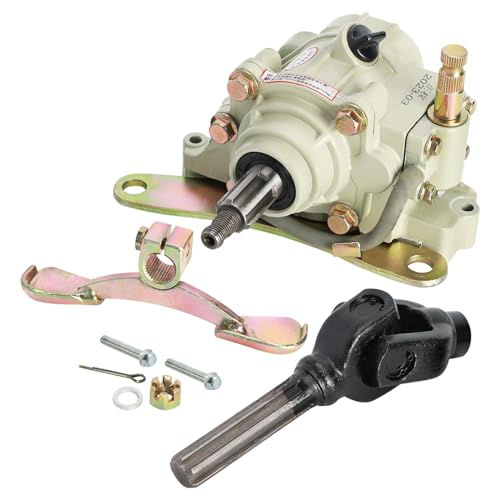
The MOOTINGMOTO reverse gearbox is designed for CG-series vertical engines ranging from 150cc to 300cc. It features a 20mm output shaft and a 190mm (7.5″) input shaft with a 6-spline female interface, facilitating straightforward installation on compatible go-kart builds. The kit is promoted as easy to install with broad engine compatibility, making it a practical choice for custom go-kart projects and conversions.
GXYWADY Forward Reverse Gearbox Kit

GXYWADY’s gearbox kit is compatible with 2–13 HP engines and supports 30-series torque converters with 12T/10T sprockets for 35 chain, 40/41 chain options. It features a three-mode shift system (forward, reverse, neutral) for intuitive operation. The build emphasizes sturdiness and long service life, suitable for recreational and entry-level competition go-karts and utility vehicles.
SEBLAFF Go Kart Forward Reverse Gear Box Kit

SEBLAFF offers a forward/reverse gearbox kit compatible with 2–13 HP engines and 30-series torque converters. It uses 35 chain with 12T and 10T sprockets, designed for Go Karts and 212cc class applications. The kit is described as wear-resistant with light weight and solid torque capabilities, aiming for reliable everyday use and simple installation.
Buying Guide: Key Purchase Considerations
- Engine compatibility: Confirm horsepower range (2–16+ HP) and the correct chain size (3/4″ jackshaft, 35 chain, 12T/10T sprockets) for your kart’s engine class and torque converter.
- Gear ratios and modes: Look for forward and reverse ratios that fit your driving style and track layout. A three-mode (forward, reverse, neutral) setup supports versatile operation on mixed terrains.
- Build quality and materials: Prioritize kits with steel components, robust mounting plates, and durable shafts to withstand repeated gear shifting and off-road use.
- Installation scope: Some kits include mounting hardware, cables, and sprockets, while others require additional components. Assess what is included to estimate total project cost and time.
- Maintenance: Consider ease of lubrication, availability of replacement parts, and service life under typical kart usage (sand, mud, wet conditions increase wear).
- Compatibility with existing drivetrain: Ensure the gearbox works with your current clutch, belt drive, and axle setup to avoid extensive modifications.
- Manufacturer support: Choose brands with clear installation manuals, troubleshooting resources, and responsive customer service for aftermarket questions.
Comparative Perspective
- Low- to mid-horsepower builds (2–8 HP): Options like maXpeedingrods, GXYWADY, and SEBLAFF provide balanced performance with three-shift operation and solid hardware.
- Mid-range horsepower (8–16 HP): Blast offers a heavier-duty solution for larger engines, with a focus on robust jackshaft support and clutch considerations.
- Installation complexity: Some kits arrive nearly turnkey; others are accessory-rich requiring more assembly. Evaluate included hardware against your mechanic’s comfort level.
- Longevity vs. cost: Higher durability often comes with higher upfront cost. Consider expected usage and maintenance availability in your decision.
In summary, selecting the right transmission kit depends on engine size, intended use, and the balance between ease of installation and long-term durability. The five options highlighted provide a spectrum of compatibility for 2–16+ HP go-kart setups, including forward/reverse operation, gear ratios, and kit contents. Use the buying guide to align features with your build goals and track requirements.