Best Trailer Hitch With Torsion Bars for Smoother Rides and Safer Towing
Towing safely and smoothly starts with the right weight distribution hitch. For American trailers and trucks, torsion-bar equipped systems help level the load, reduce sway, and improve control on highways and back roads. Below is a curated guide to five top-rated trailer hitches with torsion or sway-control features. Each entry includes core specs, benefits, and how it fits common towing setups. A quick summary table follows to help you compare at a glance.
| Product | Brand | Key Benefit |
|---|---|---|
| CURT 17063 Round Bar WDS | CURT | Integrated lubrication and sway control for quiet, smooth towing |
| Husky 31423 WDS | Husky | Smart head design with easy access to shank and adjustable height |
| VEVOR WDS Kit | VEVOR | Four-point sway control and high tongue weight capacity |
| Curt 17062 WDS | CURT | Integrated lubrication and robust forged spring bars |
| CURT 17601 TruTrack | CURT | Preci se sway control with classic weight-distribution setup |
The following sections highlight five hitch models that consistently deliver a steadier pull, improved steering feedback, and easier setup. All options support typical 2-inch receivers and are designed for a range of GTW and tongue weight needs. When selecting a hitch, consider your trailer type, tongue weight, towing speed expectations, and maintenance preferences, such as grease lubrication access and sway-control mechanisms.
CURT 17063 Round Bar WDS With Sway Control

The CURT 17063 combines a round bar weight-distribution design with integrated lubrication and an active sway-control bar. This setup distributes tongue weight across the vehicle-trailer combination to level the load, reducing pitch and improving highway stability. It includes two grease zerk fittings for continuous lubrication, helping the system run smoothly with less noise and resistance over time. With forged steel spring bars and a robust head, the hitch is rated to tow between 10,000 and 14,000 lbs gross trailer weight and 1,000 to 1,400 lbs tongue weight, making it suitable for larger trailers and heavier loads.
Key considerations: lubrication access provides quieter operation and easier maintenance; forged steel bars offer durability for frequent towing; ensure compatibility with your trailer’s tongue weight and your vehicle’s hitch receiver. This model emphasizes reliable strength and consistent leveling to maintain steering feel at highway speeds.
Husky 31423 Round Bar WDS
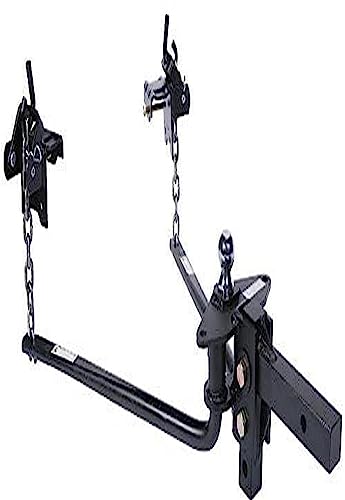
Husky 31423 focuses on practical installation and versatile compatibility. Its hitch head design streamlines the setup process, with easy access to the hitch ball shank and a built-in sway-control platform. The system accepts different spring-bar capacities, allowing for adaptable performance across various towing scenarios. A black polyester finish helps resist rust and corrosion, while lift brackets simplify hitch hook-up. The adjustable height options and interchangeable spring bars support left-or-right configurations, making it a flexible choice for mixed trailer fleets or personalized towing geometry.
Key considerations: installation efficiency, multiple sway-control options, and the ability to adjust for different trailer weights. Check your trailer’s required tongue weight and verify the shank length and overall height to ensure proper clearance with your vehicle’s bumper and exhaust components.
VEVOR Weight Distribution Hitch, 14K Capacity

The VEVOR kit delivers substantial towing power with a 14,000 lbs gross trailer weight rating and 1,400 lbs tongue weight. It features a four-point sway-control system to counter side-to-side motion for steadier highway travel. A 2-5/16 inch hitch ball is included, paired with a 2-inch shank, to match a wide range of trailers. The kit is designed to work with many surge/brake actuators and is compatible with V-nose trailers that some other hitches struggle to handle. By redistributing tongue weight across the tow vehicle and trailer axle, it can improve steering response and braking stability under heavy loads.
Key considerations: ensure your towing setup matches the 2-5/16 inch ball and the tongue weight limits. The four-point sway system can provide robust stabilization, but it may require precise adjustment during installation. Compatibility with your trailer’s geometry and braking system should be verified before mounting.
Curt Manufacturing 17123 Adjustable Hitch Bar

The CURT 17123 adjustable hitch bar is designed to work with 2×2 receiver openings and provides a substantial range of head height adjustments. It features a 5/8-inch hitch pin hole and a maximum drop of 7 inches with a rise up to 10-1/2 inches, enabling precise leveling for various trailer frames and vehicle configurations. The design includes multiple 3/4-inch diameter holes spaced along the bar to facilitate flexible head height positioning, allowing for tailored sway-control alignment and lift options when used in combination with compatible CURT weight-distribution hitches.
Key considerations: this component is a mounting and height-adjustment option rather than a complete WDS unit. It’s best paired with compatible CURT WDS systems. Ensure your trailer’s tongue height and hitch receiver fit are compatible with the extended height range to avoid clearance issues with bumper or tailgate operations.
CURT 17601 TruTrack 2P WDS

The CURT 17601 TruTrack 2P combines a true weight-distribution design with integrated sway-control. It emphasizes precise leveling of both the tow vehicle and trailer and uses round spring bars for consistent performance. A tilting head feature simplifies setup and adjustment, reducing disassembly needs when fine-tuning balance or compatibility with different trailers. The system is designed for up to 10,000 lbs GTW and includes a versatile setup that supports fast calibration of the distribution load and sway control balance.
Key considerations: TruTrack aims for precise leveling with minimal reconfiguration, but it’s important to verify the 2-inch shank compatibility and ensure the towing scenario aligns with the 7-hole adjustment range. It’s a solid option for those seeking dependable sway-reduction and straightforward setup, particularly on mid-weight trailers or mixed-use applications.
Buying Guide: Key Purchase Considerations
- Tongue weight and gross trailer weight: Match the hitch rating to your trailer’s tongue weight (TW) and gross trailer weight (GTW). Higher GTW generally requires sturdier spring bars and a longer shank, while lighter setups may benefit from compact head designs and easier adjustment.
- Sway-control method: Sway control can be built into the hitch head or integrated as an external platform. Four-point sway control, as seen in several models, tends to offer stronger motion dampening, especially on windy days or when towing on uneven roads.
- Lubrication and maintenance: Hitches with integrated lubrication reduce friction and wear, improving longevity and reducing noise. Regular grease zerk servicing helps maintain smooth operation, but ensure you have access to the head and lubrication points.
- Adjustability: Look for adjustable drop/rise ranges to align the tow vehicle and trailer properly. A tilting head or multiple height holes can simplify setup across different trailer bodies and hitch receiver heights.
- Installation practicality: Some models emphasize quick installation and easy hookups, while others require more complex alignment. Consider your familiarity with hitch installation and whether you have access to professional assistance if needed.
- Compatibility with trailer types: Some hitches handle surge/brake actuators and V-nose trailers better than others. Verify compatibility with your trailer’s design features and braking system before purchase.
- Material and corrosion resistance: Look for forged steel components and corrosion-resistant finishes to extend service life in harsh weather conditions and on frequent towing routes.
- Maintenance accessibility: Hitches with accessible grease fittings or straightforward cleaning points can simplify ongoing care, reducing the risk of rust and stiffness over time.
In evaluating these options, you’ll weigh ease of installation, maximum towing capacity, and the level of sway control that best matches your typical loads. For heavier trailers, models with robust lubrication and four-point sway control can provide the most stability. For lighter to mid-range setups, adjustable height and tilting-head designs can offer flexible alignment with less complexity.