Best Car Engine Light Checker Tools for DIY Diagnostics
Getting to the bottom of engine lights doesn’t require a trip to the shop. These OBD2 scanners and code readers help you read, interpret, and clear check engine codes, monitor live data, and assess readiness for emissions tests. Below you’ll find five top options for American drivers, each offering different features and scopes to fit budget, tech comfort, and vehicle coverage.
Summary of Selected Products
| Product | Brand | Key Benefit |
|---|---|---|
| VDIAGTOOL VD10 OBD2 Scanner | VDIAGTOOL | Wide code reading, clear DTCs, I/M readiness, freezes frames |
| MOTOPOWER MP69033 Car OBD2 Scanner | MOTOPOWER | Clear codes, live data, 9 protocols, multilingual |
| ANCEL AD410 Enhanced OBD2 Scanner | ANCEL | Broad OBDII support, quick read/clear, large code library |
| FOXWELL NT604 Elite | FOXWELL | 5-in-1: ABS/SRS/engine/transmission checks, live data |
| HG OBD2 Scanner Family (CGSULIT SC103) | CGSULIT | Knows OBDII protocols, clear codes, live data, user-friendly |
VDIAGTOOL VD10 OBD2 Scanner
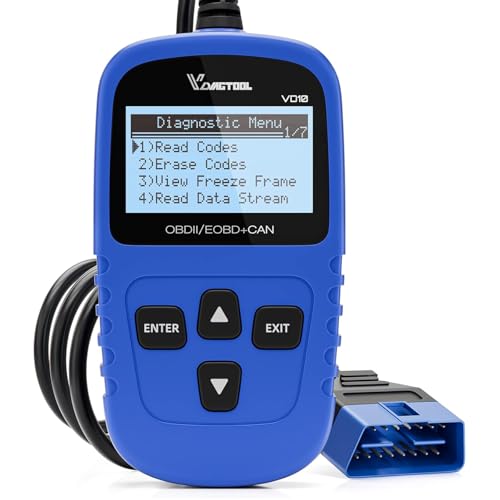
The VD10 offers essential OBDII functionality with a straightforward interface designed for DIY users. It reads generic and manufacturer-specific codes, displays DTC definitions on a TFT screen, and supports features like clearing codes, live data, freeze frame, I/M readiness, and vehicle information. The built-in database includes more than 3,000 codes, helping users identify root causes quickly. You power the device through the vehicle, so no external battery is required.
MOTOPOWER MP69033 Car OBD2 Scanner

The MP69033 focuses on broad compatibility and practical features, including a built-in DTC lookup library, read/erase codes, freeze frame, I/M readiness, and data flow with real-time curves. It supports 9 protocols for a wide range of vehicles and offers a clear 2.8-inch LCD display. It draws power directly from the OBDII port, so no extra power source is needed, making it a solid plug-and-play option for many owners.
ANCEL AD410 Enhanced OBD2 Scanner

The AD410 emphasizes broad compatibility and deep diagnostic capability. It supports all OBDII-compliant vehicles and provides quick read/clear functionality, with access to tens of thousands of DTC lookups. It can test O2 sensors and EVAP systems, perform a leak test, and monitor the fuel system. Note that it is a reader rather than a reset tool for certain problems, and it does not diagnose ABS or transmission issues beyond standard engine diagnostics.
OBD2 Scanner with Battery Tester – HipEpic

This HipEpic device provides a broad car scan with I/M readiness, live data, freeze frames, vehicle information, and a built-in battery test. It’s designed for ease of use with a plug-and-play setup and a bright 2.8-inch color LCD screen. It is an attractive option for quick checks and battery health alongside engine diagnostics, though ABS and transmission codes are not supported.
FOXWELL NT604 Elite

The NT604 Elite expands beyond basic code reading to include ABS and SRS checks, in addition to engine and transmission diagnostics. It supports the latest software, comes ready to use out of the box, and provides live data, data playback, and DTC lookups. It’s positioned as a versatile all-in-one diagnostic tool, suitable for both DIYers and professional shops, though it does not offer reset or relearn capabilities for certain systems.
Veepeak OBDCheck BLE Bluetooth Scanner

The Veepeak OBDCheck BLE provides generic OBD-II functionality with wireless operation. It reads and clears trouble codes, displays freeze-frame data, I/M readiness, and real-time sensor data via a compatible app. It supports Android with Bluetooth LE and Classic connections and iOS via Bluetooth LE. It is a flexible option for wireless diagnostics, though app compatibility should be verified before purchase.
Buying Guide
- Vehicle compatibility: Ensure the scanner supports your vehicle’s year, make, model, and whether it is gasoline or diesel. Look for devices that support all OBDII protocols relevant to your region (US, EU, Asia).
- Functionality: Decide which features matter most: reading/clearing codes, live data, I/M readiness, EVAP and O2 sensor tests, or ABS/SRS checks. Some tools offer battery testing or data logging.
- Display and interface: A clear screen and intuitive menus improve ease of use, especially for beginners. Consider a device with a color TFT or LCD and readable font sizes.
- Power source: Most tools pull power from the OBDII port, but some require additional batteries. Verify power needs to avoid surprises on the road.
- Code database: A robust built-in DTC library saves time. Look for scanners with manufacturer-specific codes in addition to generic codes.
- Updateability: Some models offer firmware updates to expand coverage and fix bugs. Check update policies and required software.
- Data sharing and portability: If you need to share results with a shop or family, consider tools with downloadable reports or app integration.
- Ease of use and learning curve: For DIY users, plug-and-play devices with simple navigation are ideal. For professionals, more advanced features and multi-system diagnostics may be necessary.
- Budget considerations: Entry-level readers cover basics, while multi-system tools offer broader diagnostics. Weigh long-term value against upfront cost.
- Safety and reliability: Look for reputable brands with clear warranty terms and customer support to ensure continued access to code libraries and updates.
These tools provide a spectrum of options for diagnosing engine lights and related issues. Selecting the right scanner depends on whether you primarily want quick code reads, or you need deeper diagnostics across ABS, SRS, and transmission systems, along with data logging and battery testing. All five options here deliver reliable engine diagnostics, so you can identify problems, verify repairs, and prepare for emissions testing when needed.