Best Diagnostic Code Scanner for Cars: Top Tools for Quick, Clear Vehicle Diagnosis
When the check engine light comes on, having a reliable diagnostic code scanner can save time, money, and hassle. The following five OBD2 scanners cover a range of features—from essential code reading and clearing to live data, I/M readiness checks, and even ABS and SRS insights. All are compatible with most 1996+ vehicles and work directly from the vehicle’s OBD-II port. Read on to compare capabilities and pick the best fit for DIYers, hobbyists, and everyday drivers.
Summary Table of Selected Products
| Product | Brand | Key Capabilities | Power | Notes |
|---|---|---|---|---|
| Ancel AD310 Classic Enhanced Universal OBD II Scanner | ANCEL | Read/clear codes, live data, freeze frame, I/M readiness, VIN, memory data | OBD-II powered | |
| VDIAGTOOL VD10 OBD2 Scanner | VDIAGTOOL | Read/clear codes, DTC definitions, freeze frame, I/M readiness, vehicle information | OBD-II powered | Easy for DIYers; extensive code database |
| FOXWELL NT301 OBD2 Scanner | FOXWELL | Read/clear codes, live data, VIN retrieval, generic and manufacturer codes | OBD-II powered | Simple, reliable for DIYers |
| BlueDriver Bluetooth Pro OBDII | BlueDriver | Read/clear codes, ABS/SRS/TPMS, live data, unlimited repair reports | Battery-free (powered by car via OBD) | Requires app; subscription-free basic use |
| FOXWELL NT604 Elite | FOXWELL | 5-in-1: ABS, SRS, transmission, engine, live data, DTC library | OBD-II powered | Advanced capabilities; ideal for broader diagnostics |
ANCEL AD310 Classic OBD II Scanner
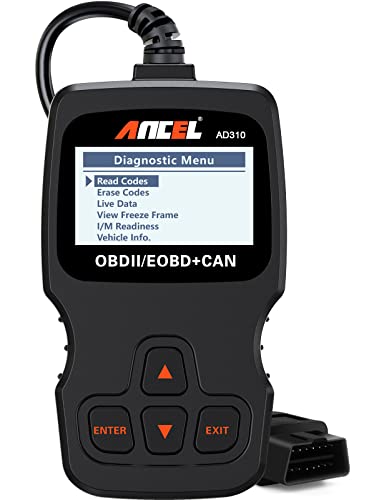
The ANCEL AD310 is a compact, durable OBD-II scanner designed for everyday use on vehicles 1996 and newer. It supports reading and clearing diagnostic trouble codes (DTCs) for emission systems and offers live data, freeze-frame information, and I/M readiness checks. The device is powered directly through the vehicle’s OBD-II port, eliminating the need for separate batteries or chargers. Its 2.5-foot cable provides flexibility in cramped engine bays, and the interface is designed for quick interpretation of results. This scanner is well-suited for homeowners and amateur mechanics who want fast, clear diagnostics without a steep learning curve.
Key features include VIN retrieval, memory data access, and a broad compatibility profile across most OBD-II compliant vehicles. The AD310’s clear labeling and legible display help users quickly identify the malfunction and monitor whether repairs have resolved the issue. While it emphasizes ease of use, it remains a robust choice for basic diagnostics and routine maintenance tasks.
VDIAGTOOL VD10 OBD2 Scanner
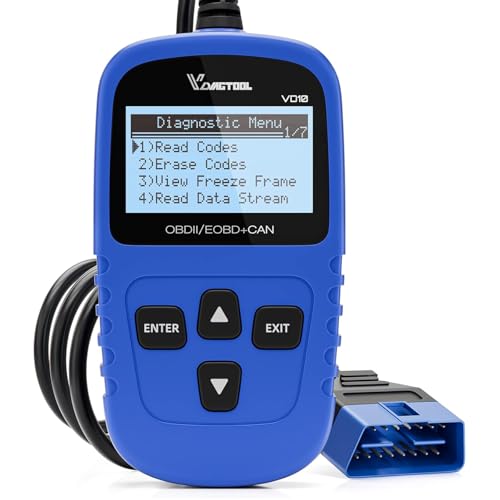
The VD10 is positioned as a must-have for DIYers with an emphasis on ease of use and speed. It plugs into the OBD-II port and provides quick access to DTCs, definitions, and freeze-frame data. Its built-in database covers generic and manufacturer-specific codes, with a library spanning more than 3,000 codes. This device highlights practical, on-the-spot troubleshooting by showing meanings of codes directly on the screen and offering straightforward guidance to clear codes after repairs. It’s a reliable option for homeowners who want a simple, fast diagnostic workflow without a steep learning curve.
In addition to code reading and clearing, the VD10 provides I/M Readiness and vehicle information retrieval, helping users gauge compliance for smog tests. Its compact design and color display contribute to an intuitive user experience, making it a strong pick for basic diagnostics and routine maintenance checks.
FOXWELL NT301 OBD2 Scanner

The NT301 from FOXWELL is designed for DIY enthusiasts seeking a straightforward, dependable diagnostic tool. It reads and clears engine codes, checks emissions readiness, and can clear the CEL (Check Engine Light) after repairs. It also retrieves the vehicle VIN and provides live data simultaneously, which helps users understand sensor behavior and engine performance in real time. The interface is simple: plug into the OBD-II port, select OBDII, and view results. This scanner delivers reliable performance for everyday maintenance and routine diagnostics and is an excellent entry point for users upgrading from basic readers.
Vehicle compatibility covers most 1996+ gasoline cars, light trucks, and SUVs in the U.S.—and it’s equally effective for many 2000+ European and Asian models. Its no-frills design emphasizes dependable operation and clear data presentation, making it a staple for garages and personal toolkits alike.
BlueDriver Bluetooth Pro OBDII Scan Tool

BlueDriver represents a modern, app-based approach to vehicle diagnostics. It connects via Bluetooth to a smartphone or tablet, providing a robust set of features without a bulky handheld unit. The tool reads and clears codes across engine, ABS, SRS, and TPMS, and it offers unlimited repair reports with potential causes and fixes, alongside live data monitoring. This makes BlueDriver a powerful option for users who want a persistent, cloud-enabled diagnostic record and guidance on repairs. The absence of a subscription for core features keeps ongoing costs predictable, while its expansive code library supports a broad range of makes and models.
For iPhone and Android users who prefer a mobile-first experience, BlueDriver provides a deep diagnostic perspective with real-time data, vehicle health monitoring, and extensive code definitions. It’s especially valuable for drivers who want ongoing vehicle health tracking beyond a single repair event.
FOXWELL NT604 Elite OBD2 Scanner

The NT604 Elite offers a broader diagnostic reach with five-in-one capability: engine, ABS, SRS, transmission, and live data. It includes a built-in DTC library and data playback, along with the ability to print data for records. The 2026 version is designed to be ready out of the box, minimizing setup time. While it targets a more comprehensive set of functions than basic code readers, it remains accessible to car owners who want more insight before deciding on professional service. It’s particularly well-suited for those who want to monitor multiple vehicle systems and perform pre-visit diagnostics with a single tool.
Note that, like all diagnostic tools, the NT604 Elite diagnoses potential issues but does not perform repairs. Turning off warning lights requires addressing the root cause first. This device is best used as a proactive maintenance and troubleshooting companion for multi-system checks.
Buying Guide: Key Purchase Considerations
- Scope of diagnostics: If you only need engine codes, a basic OBD-II reader (EDC codes) suffices. For ABS/SRS, live data, and more, consider tools like BlueDriver or FOXWELL NT604 Elite.
- Ease of use vs. depth: Beginner-friendly models emphasize quick results and simple interfaces, while advanced units provide data graphs, OEM codes, and data logs for deeper analysis.
- Display and interface: Color LCDs and intuitive menus improve readability, especially under hood lighting conditions. Consider whether you prefer handheld devices or app-based readers.
- Power and connectivity: Most tools draw power from the OBD-II port. Bluetooth/Wi-Fi adapters require a compatible smartphone or tablet and may incur firmware updates.
- Code definitions and database: A robust DTC library reduces guesswork. Some devices offer free lifetime updates for definitions and live data features; others may rely on app-based updates.
- Vehicle compatibility: While most 1996+ vehicles are supported, always confirm compatibility with your specific make/model, especially for newer or less common vehicles.
- Data usage and sharing: Tools with cloud features enable repair reports and data sharing, which can be useful for maintenance records or seeking professional advice.
- Upgrade path: If you anticipate expanding your diagnostic needs, choosing a tool with ABS/SRS or transmission capabilities can save you from purchasing a separate unit later.
- Price vs. value: Basic readers are affordable and straightforward; higher-end tools offer deeper diagnostic capabilities and longer-term cost savings by enabling early issue detection.
All six options above provide essential diagnostic capabilities from a variety of approaches. Your choice should align with how deeply you want to analyze vehicle symptoms, how often you work on cars, and whether you favor handheld devices or mobile app experiences. Regardless of choice, regular diagnosis helps maintain engine efficiency, reduce emissions, and identify issues before they become costly repairs.